

What is Jewish Investing?
Kate Poole and Rabbi Jessica Rosenberg met over a decade ago through queer community in West Philly, where they were both organizing at the intersection of wealth redistribution and liberatory Jewish practice. In 2017 they co-authored the article The New-ish Jew-ish Economy for Jewish Currents. They have each been important teachers for the other: Rabbi Jessica teaching Kate about Jewish traditions and how to weave together organizing with Jewish seasons, holidays, and rituals. Kate has been a teacher for Jessica about non-extractive, democratic, community-controlled investing and shifting power, and Jessica credits Kate as one of her influences in her journey to co-creating the recently formalized cooperative structure of Signal Fire Radical Jewish Artist Cooperative. Kate and Jessica describe themselves as having walked parallel journeys over the past decades: Jessica becoming a Rabbi and Kate becoming an investment advisor – “We both realized we can seize the means of production in our communities”.
Faith-based investing has been a force in the socially responsible investing world for several decades, though historically there was not a voice in the sector for specifically Jewish investing. That changed about 10 years ago, when a group called JLens came onto the scene. JLens and its institutional backers have forwarded a vision of what they claim as Jewish Investing. At the core of their approach is funding Israel.This approach to “Jewish Investing” tells us that we should put our money to work backing decades of Israeli apartheid and occupation of Palestine and the US-backed genocide of Palestinian people in Gaza. For us, as Jews organizing around a liberatory vision of Jewish economics who oppose the genocide and occupation in Gaza, we’re called to critically examine and unwind dominant ideas about “Jewish Investing”, and to offer a path forward that embodies our values.
Jewish investing cannot mean endless wealth accumulation, or sending money to a militarized state built on the violence and dispossession of Palestinians, justified by the lie that these strategies will keep our people safe. Jewish investing must mean supporting economic self-determination for all communities. That includes mutual aid, community building, repair, and rethinking what it means to create safety—together.

Who gets to say what Jewish Investing is?
Faith-based investing has often been on the frontlines of shifting investing norms—evidenced by coalitions like the Interfaith Council on Corporate Responsibility, which started in the 1970s doing anti-apartheid organizing for South Africa. While there have been Jewish investors that have participated, and a small number of Jewish institutions, the majority of the congregations and organizations leading this work are from Christian faiths. JLens, founded in 2012, stepped into this space and have rapidly ascended to become leaders in shaping what Jewish Impact Investing looks like. They have claimed to be about climate justice and racial justice, but mostly focused on minimizing attention to Israel’s human rights abuses. They’ve organized to get major ratings agencies like Morningstar and MSCI to omit Israel from their human rights reporting, which creates major obstacles for firms and advisors trying to build and screen portfolios. A few years ago, they were acquired by the ADL, an organization known for using its allegedly progressive history to whitewash its current day conservative agenda. JLens is steadily increasing their hold on our communities resources by investing the money of Jewish institutions. This means that in many communities, when we fund Jewish institutions, from day schools to summer camps to Jewish community centers and arts organizations, we are complicit in JLen’s conservative political agenda that undermines movements for human rights, safety, and freedom.
There have been long-time leaders in Jewish investing work like Rabbi Mordechai Leibling, Rabbi Jeffrey Dekro and Amanda Joseph, alongside funds like The Shefa Fund and economic justice organizing groups like Jews for Racial and Economic Justice.* But we haven’t seen organized opposition to JLens, or work around an alternative vision of Jewish investing. Part of the reason for this may be discomfort around gathering wealthy Jews to talk about investing, given the antisemitic myths that wealthy Jews run the world economy. We know that the reality is that a minority of Jews are wealthy, and that Jews hold a tiny proportion of the world’s wealth.
Those of us who are committed to organizing for economic and racial justice must directly take responsibility for organizing in the arena of faith-based investing, as Jews, and not let a small group of reactionaries define what Jewish investing means. We see a real opportunity for organizing those Jews and Jewish Institutions who do have access to wealth to take liberatory action with their investments, and to paint a different picture about what Jewish investing could mean.
We offer the following vision of liberatory Jewish Investing, as an expansive approach to putting the values of our faith into action. We look forward to being in conversation and practice with others to explore and hone these principles, make them actionable and proliferate them in our Jewish communities. One way to be in conversation with us is to check out the Jewish Investor Network or sign up for their April 13th webinar.

What is liberatory Jewish Investing?
Jewish Investing is investing in racial and economic justice
In Judaism, the word for moving money to achieve social good, tzedakah, comes from the word for justice, tzedek. Tzedakah is not charity, it is the obligation to work towards a more just world, and to align our money and resources with that work. When investors are looking to center tzedakah in their money movement, we support them to look at the history of wealth accumulation and examine what kind of repair is possible. We do not center or lift up investors who center racial justice as altruistic heroes, but instead invite them into this work in the spirit of reparations and making right past wrongs. We stand firmly within this tradition when we ask questions about whether the terms and conditions of community investments are increasing justice or perpetuating systems of injustice and inequality.

Jewish Investing is non-extractive and sustainable
Extractive finance is how mainstream finance works now– squeezing the resources out of already historically looted communities, without regard to the environmental, social, cultural, and economic impacts. Finance is extractive, for example, when you’re lending to a poor person at an exorbitantly high interest rate and then taking their house if they can’t pay you back.
Non-extractive finance is when investors are adding more value to the community than they’re taking out. This might include things like loan terms that are developed cooperatively between lenders and borrowers, lending that has shared risk for investors and borrowers, and an emphasis on profit-sharing, not profit-taking.
Long before the development of “non-extractive finance,” Jewish law about lending integrated principles of protection for borrowers, starting with interest-free loans. The reasons for doing so are clear, and in line with contemporary values on non-extractive finance. Exodus 22:24 commands: “If you lend money to My people, to the poor among you, do not act toward them as a creditor; exact no interest from them.” Deuteronomy 23:20 commands, “You shall not deduct interest from loans to your countrymen, whether in money or food or anything else that can be deducted as interest.” While the next verse goes on to permit interest to foreigners, Leviticus 25:36-37 makes space to change how we consider people, when they are in time of crisis:
If your kinsman, being in straits, comes under your authority, and you hold him as though a resident alien, let him live by your side, do not exact from him advance or accrued interest, but fear your God. Let him live by your side as your kinsman. Do not lend him your money at advance interest, or give him your food at accrued interest.
This passage, while disturbingly distinguishing between a “kinsman” and a ger, a resident “alien”, at least provides precedent for lending money and food without interest, and for considering a person’s financial stress as a reason for extending generosity and building a closer relationship with them. We must integrate this Torah into Jewish investing, and expand it with the wisdom of knowing that on a single, shared planet, in our interdependent ecosystems, all people are our kin.
In each of these Torah commandments, the reasons for protecting borrowers are infused with a theology: The poor are God’s people, and honoring God means not loaning at interest. It is clear that interest degrades and endangers the borrower, and Torah is clear about extending protections from what we now call extraction.
Jewish Investing is reparative.
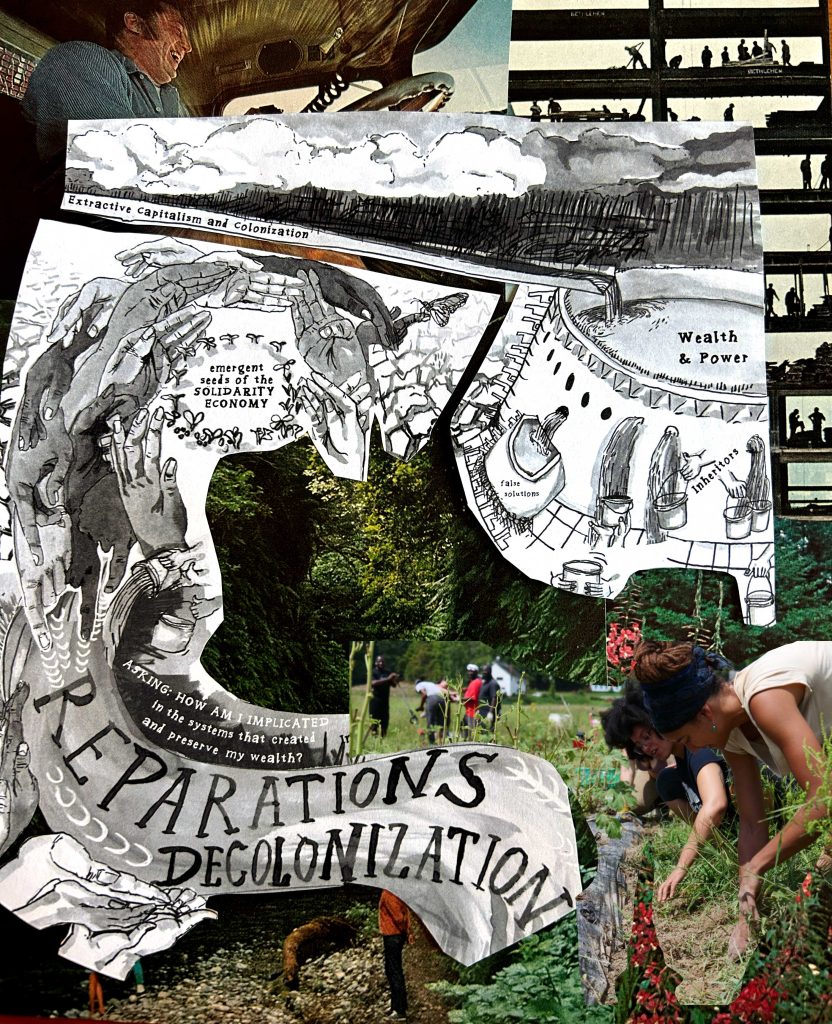
Jewish tradition has a strong ethic and process for repair. We know our economy is broken, and that wealth inequality and the accumulation of wealth are fundamentally extractive and racialized systems. For Jews who do have financial surplus, we can look at pathways to repair through redistributing wealth by returning it to communities where it came from, or by investing in ways that move capital to communities harmed by extractive capitalism. When we think about Jewish investing and repair, it’s important to name that we (Kate and Jessica) are speaking as white Jewish women with wealth, and that Jews are a multiracial, multicultural, mixed class people. Some Jews must make reparations for slavery, other Jews will be the recipients of reparations for slavery.
We find Jewish support for reparations in the concept of teshuvah. Literally meaning to turn or return, teshuvah is a process of self-examination, asking forgiveness, and making things right by repairing the damage. The responsibility to make teshuvah is both individual and collective — which is one reason why much of the liturgy of Yom Kippur asks forgiveness for the sins that “we have committed.” While reckoning with our personal shortcomings and mark-missing, we also have to think, talk, and act to repair collectively.
Applying this concept of teshuvah to contemporary economic and racial injustice, we can advocate for state and civic bodies to make reparations to historically oppressed and economically exploited communities, as well as for individuals and organizations to pay reparations to people from whom we have derived economic benefit at their expense.
Jewish Investing means working with our relationship to money and safety
Chordata Capital has always had a practice of helping people work on their relationship to money and safety. Jewish communities have always had class diversity. Historically, money often really *did* create safety for many of our people. Some families survived because of money, and that is part of the story that has been passed down to many of us. In our current context, we have the opportunity to reimagine what creates safety for Jews. We believe that fundamentally, solidarity is the path to safety. From an investing lens, solidarity might mean putting your retirement account in a community-controlled real estate fund instead of Wall Street. That may feel risky—but so is investing in the corporations that are causing climate chaos, increasing wealth inequality, and exploiting workers. Investing in our communities is about taking different kinds of risks.
Safety also looks like creating communities that support each other—where people live together, cook together, share childcare, and can afford to have less money because they have more community. That’s how our communities used to be organized, albeit with interdependence only happening within Jewish communities, not with our non-Jewish neighbors, in places where we were either forced to or chose to live in segregated neighborhoods and towns. Today, we don’t want to replicate isolated Jewish enclaves – we want interdependent Jewish communities that also build with others, and, we can learn from the models of interdependence our ancestors practiced. Jewish investing means thinking about investments not just in money, but also in time and care—beyond the nuclear family, and into communities.
Jewish Investing means standing with the Boycott, Divestment and Sanctions movement, through divesting from Israel and investing in solidarity with Palestine
Being in solidarity with Palestine is an important part of Jewish investing, because our values tell us to stand in solidarity with oppressed peoples, because we refuse to let the safety of the Jewish people be used to justify a genocide, and because we are part of a global, diverse movement in alignment with the Boycott, Divestment and Sanctions Movement (BDS). The BDS Call, which was launched in 2005, is just as relevant 20 years later. We are divesting for an end to the genocide, occupation and apartheid system, the right of return for Palestinian refugees and equal rights from the river to the sea.
There have always been Jews who have been part of Palestine solidarity and BDS organizing, and we are glad to see more Jews within donor organizing communities being part of powerful divestment projects. We are seeing Jewish leadership in shareholder advocacy targeting Microsoft, Divest4Pal, and Move Money for Freedom, alongside non-Jews.
A liberatory approach to Jewish investing could also look like supporting the BDS movement on the “invest” side of a “divest/invest” approach. BDS has deep expertise in organizing large-scale divestment, and the solidarity economy community has deep expertise in how to re-invest money in ways that are values aligned and building the new world that we need.
An example we love of integrating the divest and invest work is Jewish Voice for Peace’s Break the Bonds campaign. Coalitions have been protesting the Pennsylvania State Treasurer, who has continued to invest more and more of PA taxpayer dollars into Israel Bonds, as of July 1st, 2025 totaling $64.5M. These actions and protests have highlighted the cost of sending those funds to support Israel’s genocide in Gaza, while making the case that those funds should be reinvested instead in Pennsylvania schools, healthcare, jobs and neighborhoods. Alongside “stop sending money to Israel,” we can talk about what we want investment in, including in Palestine. Our work is never just about divesting – it’s also always about redistributing wealth to people doing mutual aid and organizing right now—helping people survive.
Jewish investing is shareholder advocacy
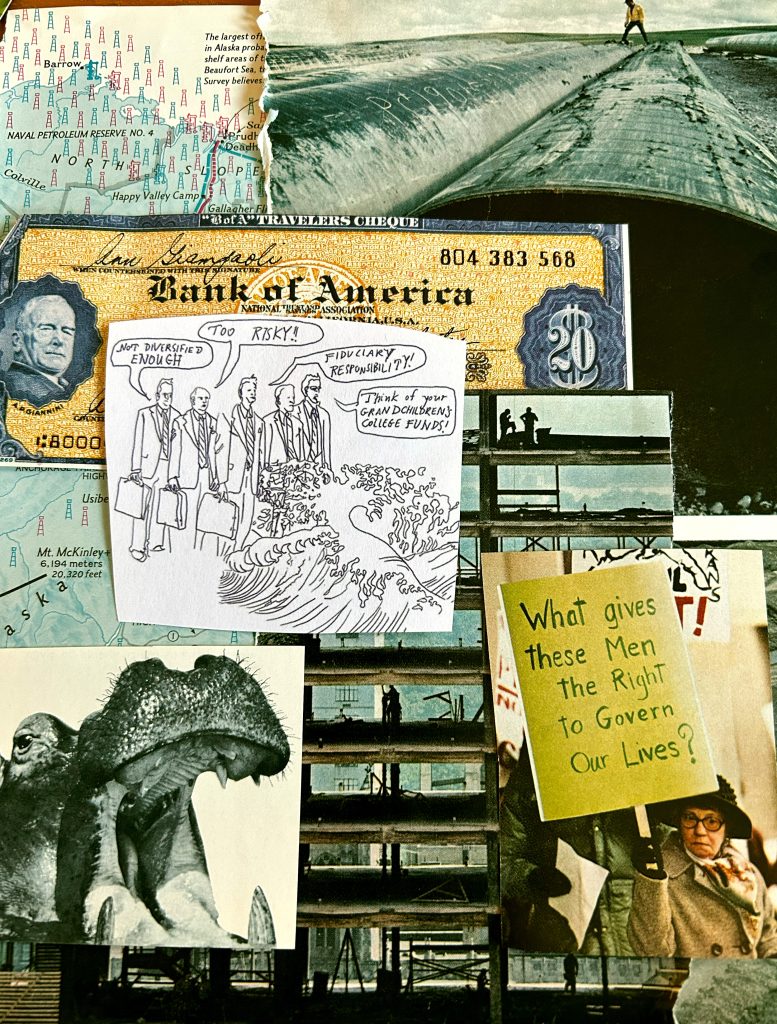
Even for people who can’t get their families, Trustees, or institutions to divest, they can still participate in shareholder organizing—voting or co-filing resolutions. BDS (Boycott, Divestment and Sanctions) has opened our eyes to the potential of shareholder advocacy. The organizations and firms that have worked to implement AFSC’s screens and follow BDS calls are responding directly to calls from solidarity movements.
A powerful example of shareholder advocacy is a campaign targeting Microsoft that originated with worker-led organizing from within the company, and focuses on holding Microsoft accountable for how its technology is being used in ways that violate human rights. Over 60 shareholders, many of them Jewish, joined the Religious of the Sacred Heart of Mary to request Microsoft evaluate whether it’s AI and cloud technology are being used to commit human rights abuses. It is a potentially winnable campaign, with a goal of flanking the organizing of workers at the company and of holding Microsoft accountable to how they’re using their technology.
We’ve witnessed the extreme hypocrisy of Jews participating in the criminalization of the BDS movement. Our tradition clearly states that Jewish values impact what we do with our money, and the rhetoric JLens uses demonstrates that many Jews are aware of this moral mandate. And yet, we still see Jewish institutions trying to undermine values-aligned investing, which is the core of the BDS movement. JLens has successfully organized to have Morningstar and other agencies to exclude Israeli human rights abuses from their ratings, which makes it much harder for values-aligned investing firms to have the data they need to support clients who want to participate in the BDS movement and divest from complicit corporations. They’ve also organized opposition to shareholder proposals for Human Rights Assessments at corporations. As groups like the JLens, the ADL and the Trump administration increasingly focus on constraining social justice and human rights in the financial sector, we are excited about the launch of Jewish Investor Network, a newly forming independent Jewish institution that brings together investors who are committed to human rights, systemic justice and collective action.
Jewish Investing means resourcing liberatory Jewish communities, alongside other movements for justice.
When we talk about Jewish investing, we need to include resourcing liberatory Jewish communities, organizations, and cultural work. We’ve noticed a pattern of wealthy Jews giving to racial and economic justice, political organizing and campaign work, and not giving to cultural, ritual, educational, spiritual and community organizing, especially within our own communities. Many Jews with access to wealth who share progressive or radical politics are uncomfortable, given the overwhelming material need in the world, to move money to cultural and spiritual projects and organizations, especially ones that are for us. This is deeply understandable. And, it is unsustainable and undermines our movements and our lives. If we don’t fund liberatory Jewish communities, no one will, and organized Jewish life will continue to be defined by Zionist, patriarchal, xenophobic institutions. And, if we believe in a world where all people can thrive, then we too get to have cultural, spiritual, ritual community homes.
Progressive or anti-Zionist Jews need to not only divest from harmful institutions, but also to resource our own under-resourced ecosystem. In the past five years, we’ve seen the number of anti-Zionist, diasporist Jewish communities quadruple, primarily led by volunteers and operating on shoe-string budgets. This does not have to be, it should not be, where all of our money and time go: we must, at the same time, be organizing in and resourcing multifaith, cross-community spaces. But if we want a Jewish future without Zionism, we have to fund it, and investing in our Jewish communities is an important piece of the whole.

Jewish Investing is mutual aid and care for community
Jews have millenia of history taking care of each other in relationships of reciprocity. Before anyone had articulated the words “mutual aid,” taking care of each other was just how we lived. Jewish investing must mean our money, yes, and also our time, our creativity, our homes, and our energies; not dedicated just to faraway charity projects that do not touch our lives, but taking care of our neighbors and letting them take care of us. This requires us to be more honest with the people we live near and about access to wealth, and it requires us to be vulnerable in asking for help as well as offering it.
In one of the earliest pieces of rabbinic literature, Pirkei Avot, we learn:
שִׁמְעוֹן הַצַּדִּיק הָיָה מִשְּׁיָרֵי כְנֶסֶת הַגְּדוֹלָה. הוּא הָיָה אוֹמֵר, עַל שְׁלשָׁה דְבָרִים הָעוֹלָם עוֹמֵד, עַל הַתּוֹרָה וְעַל הָעֲבוֹדָה וְעַל גְּמִילוּת חֲסָדִים:
1:2: Shimon the Righteous was one of the last of the men of the great assembly. He used to say: the world stands upon three things: the Torah, the Temple service, and the practice of acts of loving-kindness.
Gemilut-chassidim, acts of loving kindness, are part of our obligation to mitzvot bein Adam l’chavero, between a person and [his] companion, which take precedence over mitzvot bein Adam l’Makom, between a person and God. In many Jewish lives and communities, this is not seen as a particular political project, it is a way of life, the fabric of relationships that say: we need each other to survive, and so we take care of each other. For most of Jewish history, there wasn’t the fantasy that a ruler or a state could take care of this for us, we lived outside of those projects, and so we fed ourselves and each other. That’s what we have to get back and go forward to, if we want to survive in times of climate collapse, capitalism’s catastrophes, and fascism.
From Mitzrayim into the Wilderness
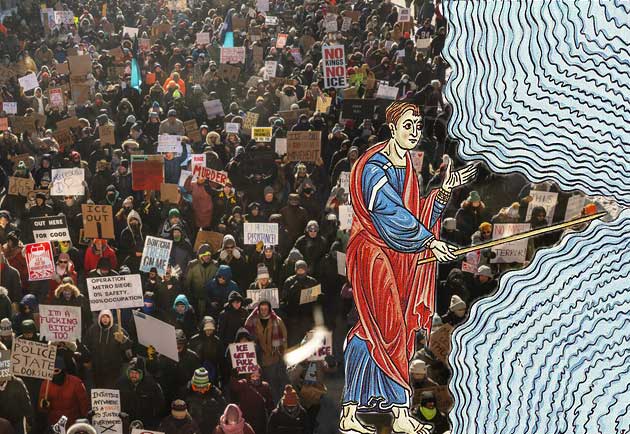
Spring is a time when Jews turn towards reflecting on collective liberation. We ask, and ritually embody the questions: how we can move from the narrow place of Mitzrayim, of scarcity, isolation, and fear, into the expanse of liberation? How can we do that while leaving no one behind?
In the Exodus story, after years of suffering and struggle for freedom, our ancestors cross the sea. When they leave Mitzrayim, they do not arrive into a problem-free freedom. Instead they crossover into the wilderness. There they have to learn to be in caring, reciprocal, interdependent relationships with each other, the earth, and the Divine. They wander, they weep, and their struggles continue, the struggle to build a new society. It is from this place that they receive revelation, receive Torah. It is not easy, it is a journey in its own right, one that we are still on today.
This Pesach, we recommit ourselves to the lifelong work of creating community in the wilderness. Those of us with access to wealth, or who are part of organizations with resources, are not exempt from liberation struggles, and from working to get our own houses in order. On the contrary, we are obligated to align our resources, and to organize and advocate for our communities’ resources, to be embodying our traditions’ highest values: interdependence with the earth, the Divine, and each other. Reciprocal care, teshuvah, and sustainability. Only then are we truly able to move from narrowness into freedom.
*Learn more about the history of Jewish investing and Jewish economics work by signing up for this webinar with Jewish Investor Network on April 13th.
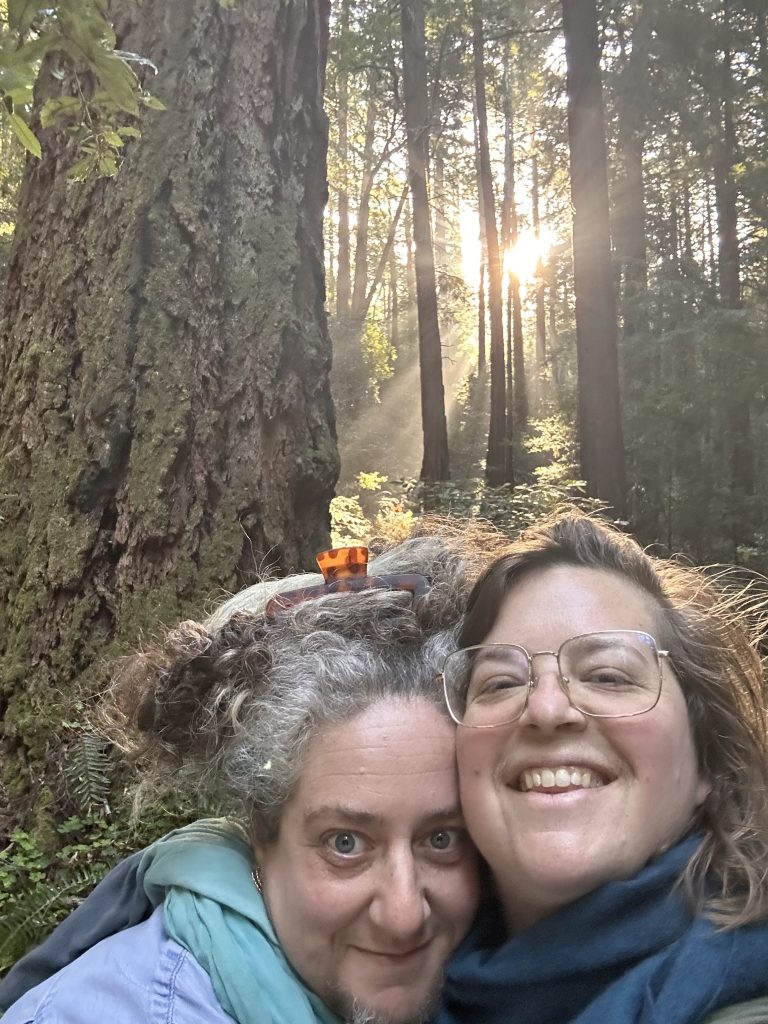
Jessica and Kate with Redwoods in Northern California, March 2026
Bios:
Kate Poole partners with people with wealth to transform their investment portfolios at Chordata Capital, building on years of organizing and agitating in the impact investing field. Kate has worked in the local investing ecosystem since 2009, and has been a member of Resource Generation since 2013. She co-founded Regenerative Finance in 2014 to organize other inheritors to shift control of capital to frontline communities. She served on the board of the New Economy Coalition from 2018-2023.
Kate is a white wealthy Jewish dyke who lives in Philadelphia. Kate has always been interested in how spiritual practice shapes economic actions, which led her to explore both Buddhist Economics and Jewish Economics. Kate also loves dance and feminist performance art, and making zines and comics.
Rabbi Jessica Rosenberg currently resides on Dakota land, also home to the Anishinaabe, known as South Minneapolis. She was raised on Lenape land, in the Philadelphia suburbs, by Ken z”l and Shelley, accidental organizers who taught her that Jewish communities should be life-giving and values-aligned, and that it is up to us to build them. She became a rabbi in order to learn our people’s diverse and nuanced histories, and create spaces, ritual, and organizing that helps transform our relationships to past, present and future.
Ordained at the Reconstructionist Rabbinical College, 2018, Jessica is a founding collective member of Signal Fire Radical Jewish Artist Coop, and creator of the Radical Jewish Calendar project. She is co-author, alongside Rabbi Ariana Katz, of For Times Such As These: A Radical’s Guide to the Jewish Year, and authored an Introduction to Trauma, Healing and Resilience for Rabbis, Jewish Educators and Organizers. She is a founding collective member of Signal Fire Radical Jewish Artist Cooperative, a member of the Jewish Voice for Peace Rabbinical Council, a ritual leader and organizing collective member of World to Come – Twin Cities.