• Skip to primary navigation
  • Skip to main content
  • Skip to footer
Chordata Capital

Chordata Capital

Investment with a Backbone

  • About Us
    • Backbone
    • Ecosystem
    • Our Team
  • Investment Advising
    • Our Approach to Investing
  • Impact
    • Our Investments
    • Chordata Cohort
  • Resources
    • Blog
    • Zine
    • Press
  • Contact Us

Uncategorized

Investing in Appalachia, Before and After Hurricane Helene

November 11, 2024

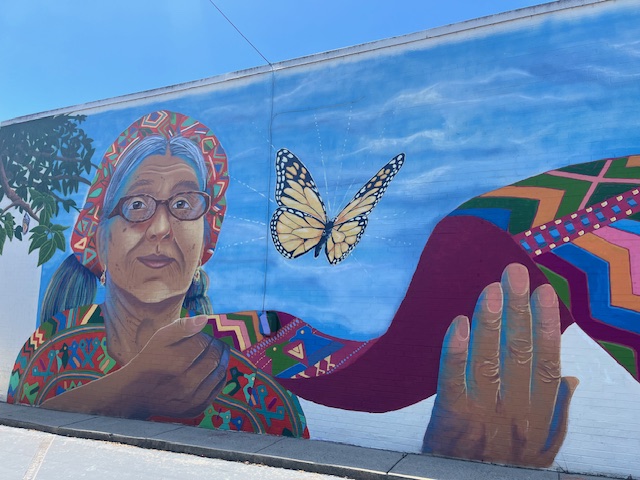
A mural I visited in Morganton, NC depicting elder Francisca Mendez Rodriguez as part of the Industrial Common‘s cultural work. The mural was created by Alexa Eliana Chumpitaz as part of a mural project celebrating diversity in the Catawba River Basin. 

Chordata facilitates the flow of capital between investors who want a new economic system and projects that are building the solidarity economy. To fulfill that mission, a significant part of our work has to be lacing up our sneakers and getting out there to connect with solidarity economy projects happening around the country.

Over the summer, I visited Western North Carolina to meet with absolutely incredible people and communities who are building the solidarity economy in Appalachia. I’ve been heartbroken to see the devastation wrought by Hurricane Helene since my trip. The storm directly impacted many of the communities and projects I visited. This post is the story of my visit, the story of the aftermath, and a call to action. 

I’d like to start by sharing a message from our partner Andrew Crosson of Invest Appalachia: 

“Hurricane Helene has devastated Western North Carolina as well as other parts of Southern Appalachia. The destruction to lives and livelihoods is far beyond the scale of what the national media has been able to convey. Entire towns were swept away by floodwaters, oversaturated mountainsides erasing dozens of houses and entire extended families with a single landslide. Hundreds of thousands of people remain without water, power, or internet, and thousands have lost their homes. Basic infrastructure like roads and bridges will take months, if not years, to repair. Hundreds of businesses lost everything, and face a long road to recovery. Yet the people of Asheville and the small towns of WNC have shown incredible solidarity, strength, and generosity. Direct donations from across the country have funded incredible aid operations, and civilian supply runs kept people safe, fed, and watered in the week or so before any federal resources were broadly available. Grassroots nonprofits, mutual aid groups, faith groups, community organizations, volunteer fire departments, and others have developed incredible recovery operations and ongoing support networks.” 
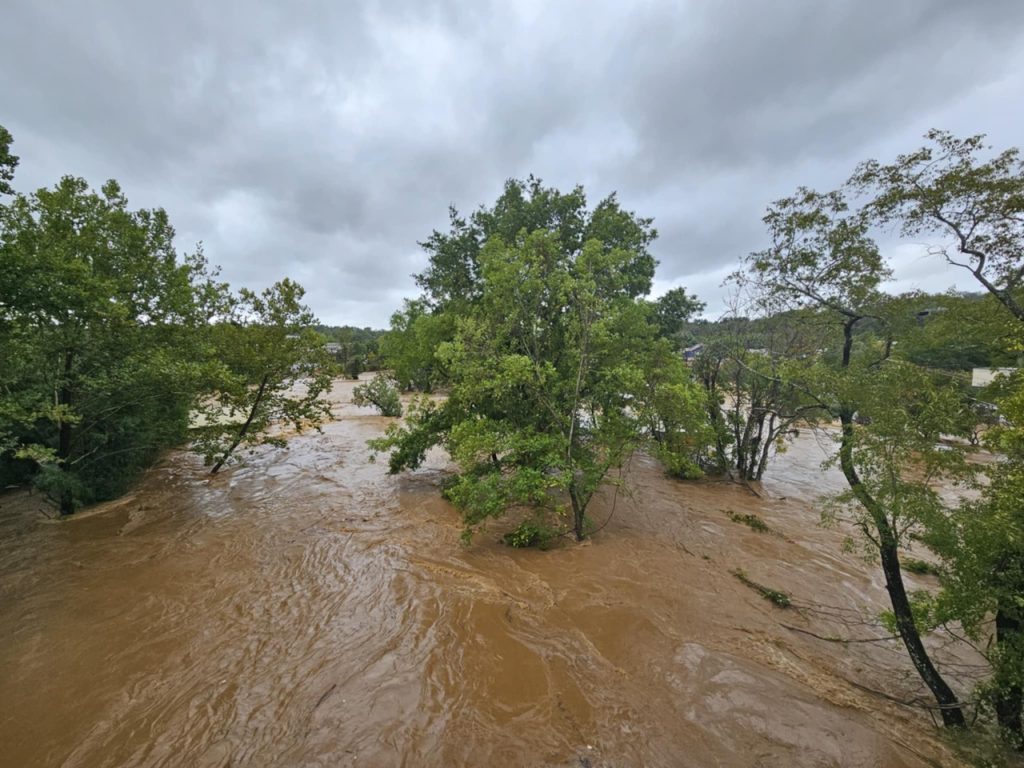
Swannanoa River at its peak, covering entire buildings. 

Here’s how you can help in the wake of the hurricane:

Rebuilding will be a long process and funding tends to dry up entirely within a few months of a disaster like this, so local partners are working to marshall as much funding as possible now. Our partners at Invest Appalachia, along with Mountain Bizworks, and Appalachian Community Capital are developing investment strategies for immediate recovery and long-term rebuilding that center resilience and equity. We want to share this menu of investment needs with the Chordata community, and encourage you to contribute. Direct donations of $1,000-20,000 can be made through Invest Appalachia’s website. For smaller-dollar donations, please see this list of direct support options. Grants are the most helpful, followed by recoverable grants and no recourse zero interest investments (from DAFs or impact investors).  

For Chordata clients – we will continue to invest in Invest Appalachia and stay connected to the work happening in the ecosystem. If you’d like to discuss additional investment opportunities, please reach out to us to set up a time to talk.

Community-led cleanups in Asheville and across WNC

My trip to Western North Carolina, before the storm

The days I spent in Western NC were deeply inspiring. I got to visit several amazing communities, and here I’ll share the story of the small town of Old Fort.

My trip started on a Thursday in June when I hopped in a car with Andrew Crosson of Invest Appalachia and drove to Old Fort, 30 min from Asheville. We drove into the mountains and all of a sudden it was just trees everywhere. Old Fort is a really small town that has been in the midst of an economic revitalization. It’s formerly a textile town in a beautiful region and was home to many different immigrant communities. The town was heavily dependent on its textile industry, and with the impacts of NAFTA over 40,000 jobs moved overseas and were lost in the area. 
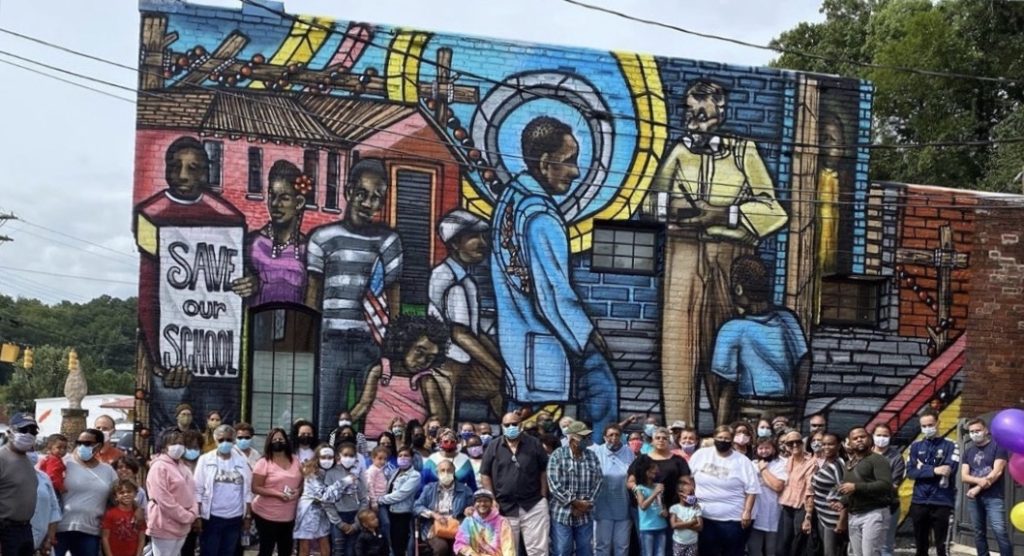
In 2020, People on the Move in Old Fort gathered a group of community members to produce a mural in the center of town, honoring local history that contributed to our national struggle for civil rights. The mural was painted by artist Don Rimx. Photo from oldforttogether.org

Chordata has invested 1.85 million dollars into Invest Appalachia, and the first loan they made was to this incredible powerhouse team, Jason McDougald and Stephanie Swepson-Twitty, who run the Catawba Vale Collaborative. We met up with Stephanie and Jason at a cute coffee shop in downtown Old Fort. Stephanie is local to the area and is the Director of Black- and female-led non profit developer Eagle Market Streets CDC. Jason is the Director of a special non-profit summer camp in the area, Camp Grier, and is also super dedicated to the region.

Stephanie and Jason came together around a shared question: “What’s the economic future of our community?”. In response to this, they formed the Catawba Vale Collaborative to do economic development from the ground up. Their focus has been building up ecotourism in Old Fort, which is a big economic driver. But this isn’t just any ecotourism project – they are positioning marginalized communities to take advantage of economic growth from the beginning, leading the project with a push for workforce and affordable housing, and storytelling to enrich locality and identity through community-engaged archaeology. Pretty amazing!! You can read more about how this all came to be, here.

A trail in Old Fort opened by the G5 Collective. “Once complete the trail system and other projects being spearheaded by Camp Grier and Eagle Market Street will make Old Fort a model of equitable economic development centered on outdoor recreation.” – G5 Trail Collective, photo from g5trailcollective.org

They’ve built a partnership with the Forest Service to build trail systems in the area, and for every 1 mile of trails, they believed that about 6 businesses would follow in the footsteps. They’ve woven a multiracial, “everybody thrives together” approach into everything they’re doing. For example, they shared about a project they did with the initial 6 miles of trail making it very accessible so it’s not just for the wild mountain bikers that come from other places, but also folks from the community who can go for a nice walk in the evening.

Visitors playing in the pools at the base of Catawba Falls in the Pisgah National Forest in Old Fort. Photo from Asheville Citizen Times

The kinds of businesses that often come along with ecotourism are things like breweries and coffee shops, shops selling trinkets, or outdoor excursion providers. In order to support the development of these businesses in an equitable way, they saw the need for community gathering space as well as business incubator space so that people could have affordable rent, learn trades like graphic design, or have access to a test kitchen.  In order to do this, the Catawba Vale Collaborative acquired one of the anchor buildings in downtown Old Fort, a 60,000 sq. ft. former Ethan Allen furniture building, now called the Catawba Vale Innovation Market. This ended up being on of the first opportunities Invest Appalachia invested in, providing most of a $2 Million loan that had to be fast, flexible, and affordable.

I got to visit the space. It’s an enormous building right on a trail called the Fonta Flora. As we were standing outside in the heat there were 2 bike riders going by, cruising through town. I could see a wine bar that was open, and another brewery across the way. You could see the town starting to come back from what was essentially tumbleweeds after the loss of their main industries. 

The Catawba Vale Innovation Market

We then drove up to see Camp Grier, where Jason is the Director. Camp Grier was started by a church post segregation and they were an intentionally integrated space, with a lot of Black folks and folks from other identity groups coming together. The way that they’re thinking about development is fascinating! They have a partnership with a local community college to do trades programs to equip folks to address some of the economic needs of the community, like construction. Camp Grier also anchors the G5 Trail Collective, which was recently awarded $2.5MM from the State of North Carolina to build the remaining 30 miles of trails that were approved by the US Forest Service in the Old Fort complex. 
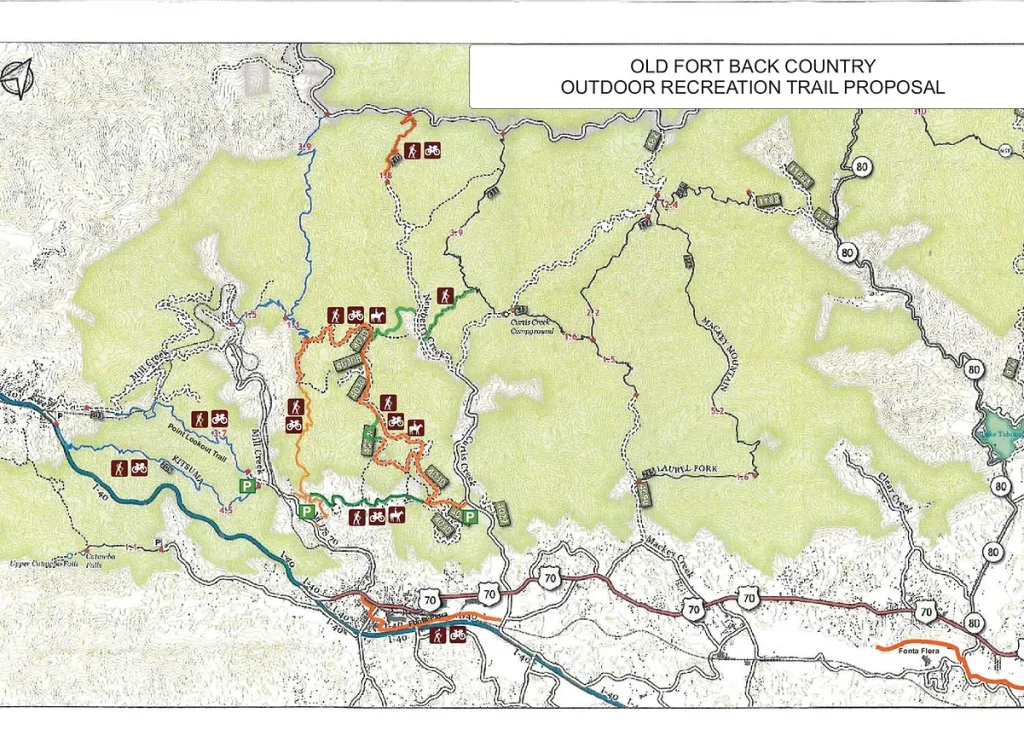
In 2020 the Old Fort Trails Team held numerous public Zoom session to solicit input and present tentative trail designs. This is one of the earlier proposed trail maps. Photo from G5 Trail Collective

To cap off the day, I of course had to go on a hike. The town was in the process of completing a trail system for Catawba Falls. This was a hot summer Thursday, school wasn’t even out yet, and the parking lot was full and there were so many people out there! It was a pretty grueling trek, and the path led up to a gorgeous view of waterfalls. There were people of all walks of life enjoying the beauty. I got to see what happens when you invest in the infrastructure of the ecotourism industry and how it has become an incredible economic driver. I would have loved to have a beer immediately somewhere, or get a special Old Fort hat! They expect to see half a million people coming through Old Fort now that they’ve done all this trail work. 

Here I am at the Catawba Falls with Andrew. My phone says I climbed 54 flights of stairs! Thanks for believing in me, Andrew!

It was so inspiring. I’ve seen some towns die before, like my mom’s town in the central valley of CA. It was beautiful to see a really collaborative and equitable development plan that lifts everyone up together. 

After the storm

I’ve been in touch with Andrew from Invest Appalachia since Hurricane Helene, and he’s shared that a lot of the places I got to visit have been deeply impacted by the storm. Here’s what he shared with me:

The town of Old Fort was heavily impacted (news story here and here). Most of the downtown ended up flooded, harming many businesses including Hillman Beer, the local brewery where we ate lunch, and lots of infrastructure was damaged.
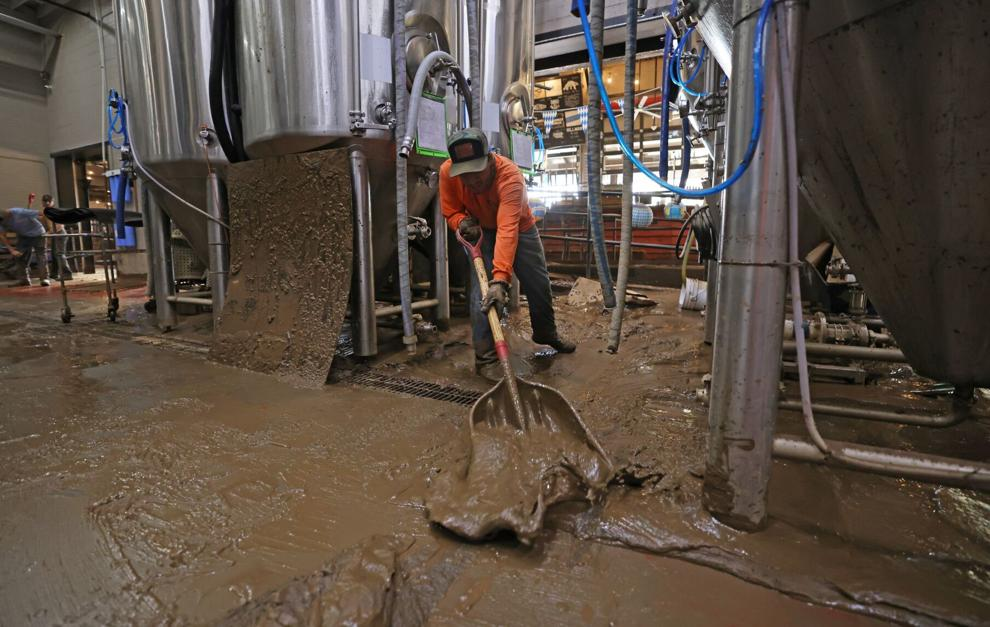
Hillman Beer after the storm – via Winston-Salem Journal

The Catawba Vale building was just outside the flood zone – the water literally stopped at the end of the street. It has been stepping into its community purpose and serving as a storage and distribution hub for aid, serving the national guard, FEMA, and non-profits. 

Camp Grier, the Old Fort nonprofit summer camp that we toured and heard about their emerging workforce housing project, was also spared direct damage and has served as a community refuge and wellness center for impacted residents, providing emergency lodging, food, showers, etc.

Facebook post from Hillman Beer – via Facebook

The trail that we hiked up to Catawba Falls was severely damaged, and it’s unclear when it will open again. 

The interstate that we drove between Old Fort and Asheville was damaged by a landslide but is back mostly open. 

Interstate I-40 near Old Fort, via WLOS news 13

The wine bar in Asheveille where we had a pre-dinner snack, Bottle Riot, was heavily damaged. The surrounding River Arts District was devastated, with countless businesses and buildings destroyed.
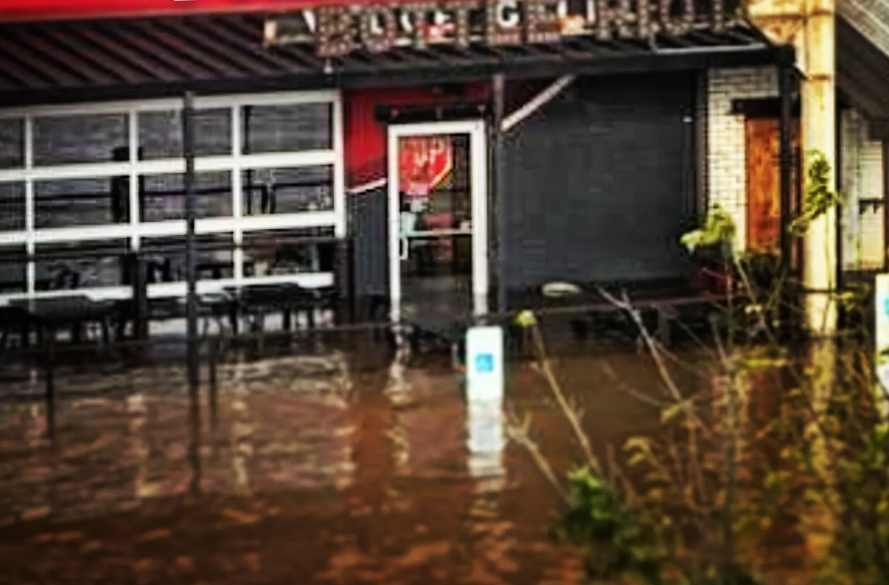
Bottle Riot, via Facebook

Investing for years to come

It has been heartbreaking to witness the devastation of these special places I got to spend time so recently, and our love and care goes out to the communities impacted. Chordata is committed to riding through the ups and downs with the folks we invest in. Climate chaos will only continue to escalate, and we know that dollars that support rebuilding in equitable ways are essential. We’re so grateful for the leadership and guidance of our partners in Appalachia.

I’m grateful that I got to be on the ground and that I now have a direct connection to these projects and communities, and I am reflecting on how deeply important it is visit these places to build relationships and really understand the back story of it all. We look forward to investing in Appalachia for years to come.

A mural I visited on the Asheville Black Cultural Heritage Trail
Investing in the Movement for Tenant Power and Community Controlled Real Estate

March 28, 2024

We recently returned from Right to the City Alliance (RTTC)’s member assembly in New Orleans. We were incredibly grateful to be invited into this space and for the chance to learn directly from organizers building the solidarity economy!!! RTTC is a national alliance of more than 90 community-based organizations growing grassroots power to halt gentrification and displacement, and build democratic, just, and sustainable communities.

We’ve had a yearning since we first started with Chordata to get clear about what social movement investing looks like in our work. RTTC is developing an analysis and roadmap for coordinated national work for housing justice, including a clear analysis that Wall Street is not our friend. We loved chanting “Down, down with Corporations! Up, up with Liberation!” And are lit up to be in relationship with RTTC and mobilizing investments in line with this beautiful roadmap of what it takes to win!

We participated with groups across the country in building a shared analysis about what we’re up against. In a brilliant “State of the Movement” plenary, RTTC’s organizers described how the far right neo-fascist agenda is being developed and implemented in the US South, and how these strategies are coming for the rest of the country. They described how the rise of the far right is directly linked to the failure and devastating impacts of neoliberalism in this country. As neoliberalism stopped working for white working class people, the solution that’s been offered is neo-fascism, often couched in progressive terminology like “the elites don’t want you to have money or power”. The rallying cry at the assembly was that in order to defeat neoliberalism we have to beat back the far right, we need to focus our efforts in the South, and we need to block false solutions and build real alternatives.Towards these ends, we learned about core interventions like community controlled real estate, corporate targeting, rent strikes and tenant takeovers. One of Chordata’s investing priorities is community controlled real estate, and we felt so much alignment with RTTC’s vision! Some of our current community controlled real estate investments include EBPREC, Local Code Kansas City, Seed Commons, Cooperative Fund of the Northeast, and LEAF. 

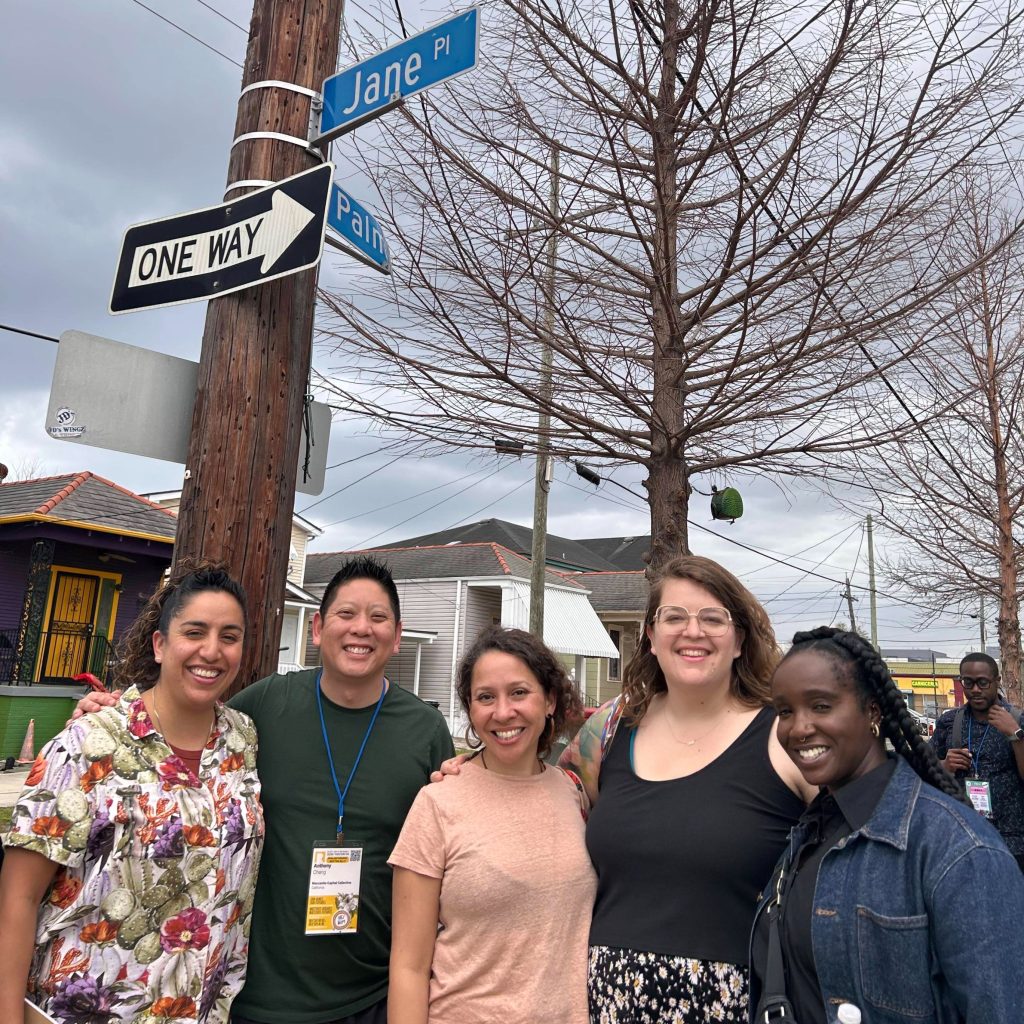
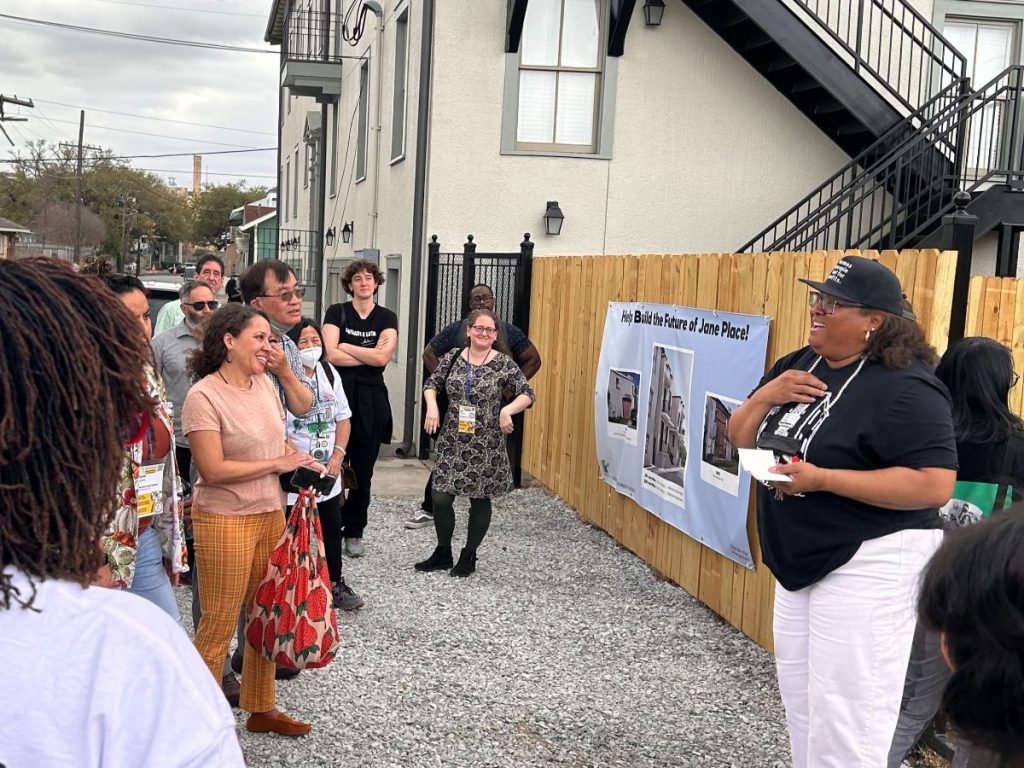
Visiting Jane PlaceWhile at the convening we visited an amazing New Orleans-based project called Jane Place. They create permanently affordable housing, advance tenant rights, expand housing security, and uphold equitable housing patterns and land use planning. In 2016, Jane Place opened the first permanently affordable apartment building in New Orleans- the Palmyra Street Apartments- and they are currently working to develop 14 more units of permanently affordable housing.Leaders from Jane Place spoke at the conference, offering framing about the impacts of disaster capitalism on their city, as well as how the work they’re doing to create community controlled housing is tied to climate resiliency. So many houses in New Orleans are being purchased and turned into Airbnbs, leading to displacement of local people. We heard about Jane Place’s incredible organizing work to win new limits aimed at curbing short term rentals in residential neighborhoods- this means there can only be one Airbnb per square block in New Orleans! What’s beautiful about the work of Jane Place is that in the face of displacement and gentrification and super high rents, they’re able to purchase buildings and rent them at really affordable prices to local residents. 

Here we are at Jane Place, hearing from Executive Director Veronica Reed about their work to resist displacement and purchase properties for affordable housing

Looking under the financial hood of tenant takeoversAlso at the convening, we heard from several groups that were able to organize tenants to take over properties!! One project with over 80 families ended up having to take on an around $12 million loan that they are paying around 8% interest on, a super extractive rate of return. That pencils out to around $1M in interest each year, which is an extra $12,500 that each of those families has to pay a year just to cover the interest! This creates a huge burden on tenants who are just trying to live in their homes. Stories go viral about beautiful tenant takeovers, as they should. But if you’re not looking under the hood and seeing what’s happening with the financing, there can still be a lot of extraction happening. We’re really curious to look at where the opportunities are to bring more values aligned, lower interest and no interest capital to tenant takeovers so that people aren’t saddled with so much interest. If we want to see more of these tenant takeovers happening all across the country it’s going to take a lot more capital. One of our major takeaways from the convening is that we need more people on the investment side of things coming in alongside this amazing organizing. We want to see those of us on the investment side of the ecosystem communicating with groups about different kinds of values-aligned capital that’s available, and mobilizing local and national capital to support these incredible projects with more favorable terms.

We saw so many beloved colleagues! Here we are hanging out at Jane Place with our dear friends Mariela Cedeño and Anthony Chang of Manzanita Capital Collective, and Nwamaka Agbo of Kataly Foundation.

For those of you wondering how you can connect more to this work, here are a few places to start:Find Right to the City affiliates or other housing justice organizers in your community and figure out how to uplift that work and support renters in your region Look into your investments to see if you hold real estate investment trusts (REITs), or shares in corporations or private equity companies that are buying up apartments and houses and extracting wealth from tenants. If you’re a Chordata Client, we’re already working with you to divest from Wall Street! If you manage your own investments, consider divesting and shifting that capital into community-controlled real estate instead!

 If you’re a member of Resource Generation, get plugged in to their new national campaign on housing, in partnership with Center for Popular Democracy’s House Everyone Campaign!
 Reach out to Fernando Abarca at Right to the City to learn how to invest in their fund and move capital to support their work!

a call to action from Right to the City Alliance! 

Allison Thomas and The Work of Repair

November 10, 2023

Allison has been a Chordata client for 3 years, and we have been so inspired and moved by her story of walking the path of repair. We asked Allison to share more about her journey as a white wealth holder and as a descendant of enslavers. Her story illustrates the ethic of repair that we are guided by at Chordata, and we are grateful to walk this path with her as collaborators. 

Tell us a little bit about how you came into access to wealth and what your journey has been thus far around redistribution. What drives you in this work? 

I came into wealth late in life due to the sale of several family homes through my divorce and the death of my father. When you sell real estate a lot of capital is freed up. I descend from enslavers in colonial Virginia on my father’s side, which means that my wealth is rooted in enslavement and the legacy of white supremacy today, even though we no longer own a plantation or other assets from enslavement. We are beneficiaries of that system, the legacy of which we still struggle with today. Part of repairing the harm committed by my enslaver ancestors requires that I make personal financial reparations to the extent that I can. I began by taking an alumni praxis with Resource Generation in 2020. Wrestling with my wealth and responsibilities was emotional and draining. Of course, it was not as draining as worrying about how to make rent or put food on the table. I gradually learned to accept and be honest about my wealth. I overcame my inclination to only give away what was tax deductible, and made a commitment to spend down my wealth. Along the way I attended a webinar that featured Kate and Tiffany.

What first drew you to Chordata? What were you seeking, and why? 

I learned through the RG program that philanthropy was an insufficient way to redistribute my wealth, so Chordata was a natural next step for me. Kate and Tiffany educated me about investing in the solidarity economy which had immediate appeal for me. I have a high tolerance for risk due to my early career in the tech industry, and encouraged them to find opportunities where my investment horizon of ten years would be helpful. It has been transformative for me to find a team that I can trust to guide me to solidarity economy investments that I would never have found on my own.

How do you connect your radical genealogy work with your investing work?

There are two ways: geographical and issue based. Because my family history traces back to Virginia, I had hoped to concentrate my solidarity economy investments in that state, but there are simply not enough opportunities yet. I hope that many of the innovative programs/financing mechanisms that Chordata has introduced to me will spread to the rest of the country. I’d like to be able to do more of this kind of investing in Virginia, where my ancestors committed the most harm. Above all, I am interested in putting my wealth to work rather than having it sit somewhere earning interest.

In terms of issue-based reparations, I am deeply interested in investing in Black entrepreneurship, housing, worker-owned ventures and land reclamation projects.

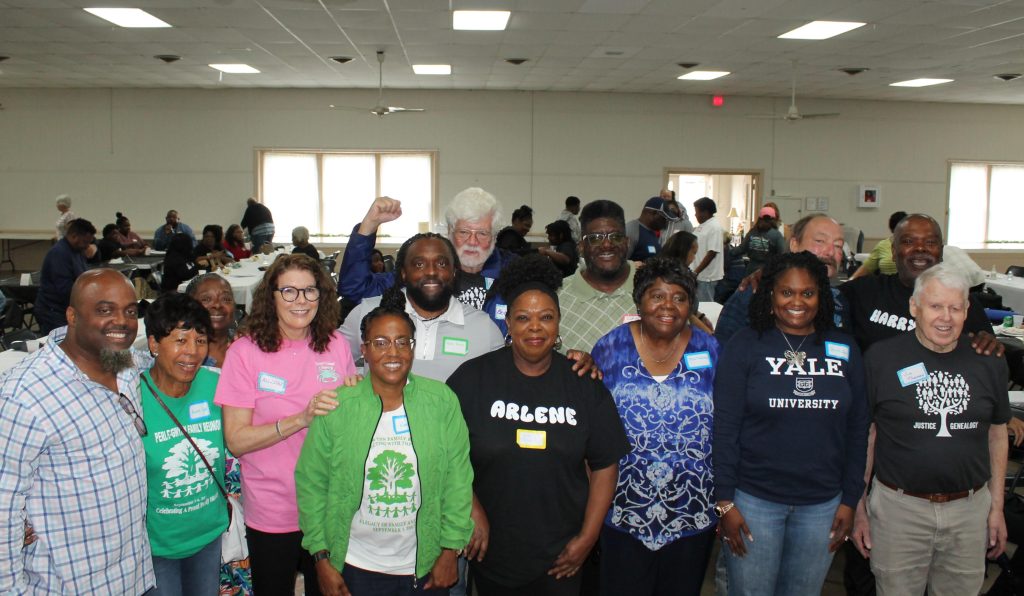
This image has an empty alt attribute; its file name is Reunion-committee-1024x596.jpeg
Reunion committee for the reunion on Gwynn’s Island

Tell us about your work with linked descendants and Gwynn’s Island. How has it changed over time? How are you relating to it now?

My work excavating my family history of enslavement continues to evolve today. I began working with descendants of people my family enslaved in Mathews County, Virginia in 2016, and ended up spending four years uncovering why the Black community was run off Gwynn’s Island (in that county) in 1916. As a form of repair and healing, my family and I worked with descendants of the Black Gwynn’s Island community on a website to restore the true history of the community, a series of articles and talks (in NonProfit Quarterly, and Reparations4Slavery), a revised history now distributed in the local museum, and family reunions to reconnect ties broken by the exodus. Our third reunion will take place in early October, and we have 150 RSVPs. We did a quick and dirty documentary based on the second reunion you can watch here. We are also working with the State of Virginia to install a historic marker restoring the history of this vibrant community. 

I have also embarked on a justice genealogy project related to my 7th great-grandfather who signed the Declaration of Independence. Oral history in the Black community claims that Braxton fathered a child with an enslaved woman, and that he freed both. In 2022, I teamed with two Black linked descendants of Carter Braxton, one who descends from Carter’s illegitimate son, and another who descends from a man enslaved by Braxton, and enlisted the help of my white Braxton cousins to reconstruct this family across racial lines. To prove the legacy of sexual exploitation, we are gathering DNA from Black and white Braxtons. The three of us have launched a Facebook page, spoken to the Richmond Free Press, and spoke at the 13th Annual Lemon Project Symposium at William and Mary. 

Justice genealogy requires community, both for mentoring and emotional support. I am active with Coming to the Table, founded by descendants of enslavers and enslaved people, especially in their Linked Descendants group, and I recommend that descendants of enslavers join this group when they are ready to dig deeply into their ancestry. 

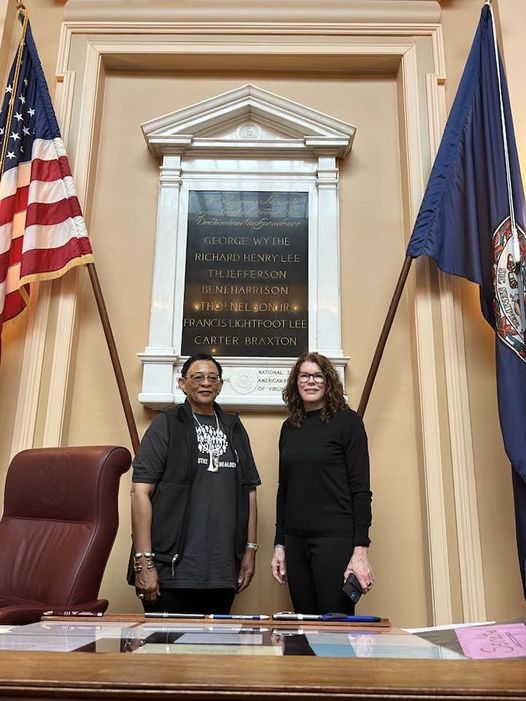
This image has an empty alt attribute; its file name is 337288733_961496735008459_4107162626617432475_n.jpg
Allison and her cousin, Viola O. Baskerville, standing underneath a list of the Virginia Signers of the Declaration of Independence that includes their mutual ancestor, Carter Braxton


Our Trip to the South with RUNWAY: Building Infrastructure in Support of Black Economic Power

July 25, 2023

RUNWAY is one of Chordata’s core partners in the work of repair. Led by an incredible leaderfull team of creative Black women, RUNWAY is a financial innovation firm working nationally to support Black economic power building. Chordata is invested in their work in a variety of ways: In their CD program in partnership with Berkshire Bank, in Something Better Foods, a company run by RUNWAY entrepreneur Chef GW Chew, and we are in the process of investing in REAL People’s Fund, a community-governed fund in the Bay Area that RUNWAY leads.

Excitingly for all of us, RUNWAY just launched ROOTED, a 10-year commitment to investing in the South, which will include a national fund that can support Black creatives and entrepreneurs across the country. The project is led by our friend and colleague, Jessica Norwood, the Founder and CEO of RUNWAY and a frequent guest in our cohort programs, sharing stories and examples of repair.

In May of 2023, RUNWAY hosted a delegation to visit Alabama! It was a learning trip with the full RUNWAY team and their allied funders, to visit with several Black communities in Alabama to explore what it would be like to build an economy in Alabama that loves Black people.

I felt so lucky to be invited and to attend! I felt really lit up by this trip. It was really special for me as a white, wealthy inheritor to be welcomed into Black-led work and Black-owned spaces in the South. I felt deeply moved when trusted colleagues would name me and name the importance of Chordata’s work in their presentations to these communities. 

We started in Mobile, where Jessica grew up. Her father was the mayor of Pritchard, a Black town right outside of Mobile. It was so powerful to hear Jessica in conversation with her father about what it takes to build and sustain Black political and economic power. We traveled to neighboring Africatown, and visited the graves of survivors of the Clotilda, the last known slave ship that landed in the Mobile delta in 1860. There’s an incredible film, Descendant, that documents the story and includes film footage of Cudjoe Lewis, one of the oldest survivors, taken by Zora Neale Hurston in 1927 (she tells his story in his own dialect in Baracoon). 

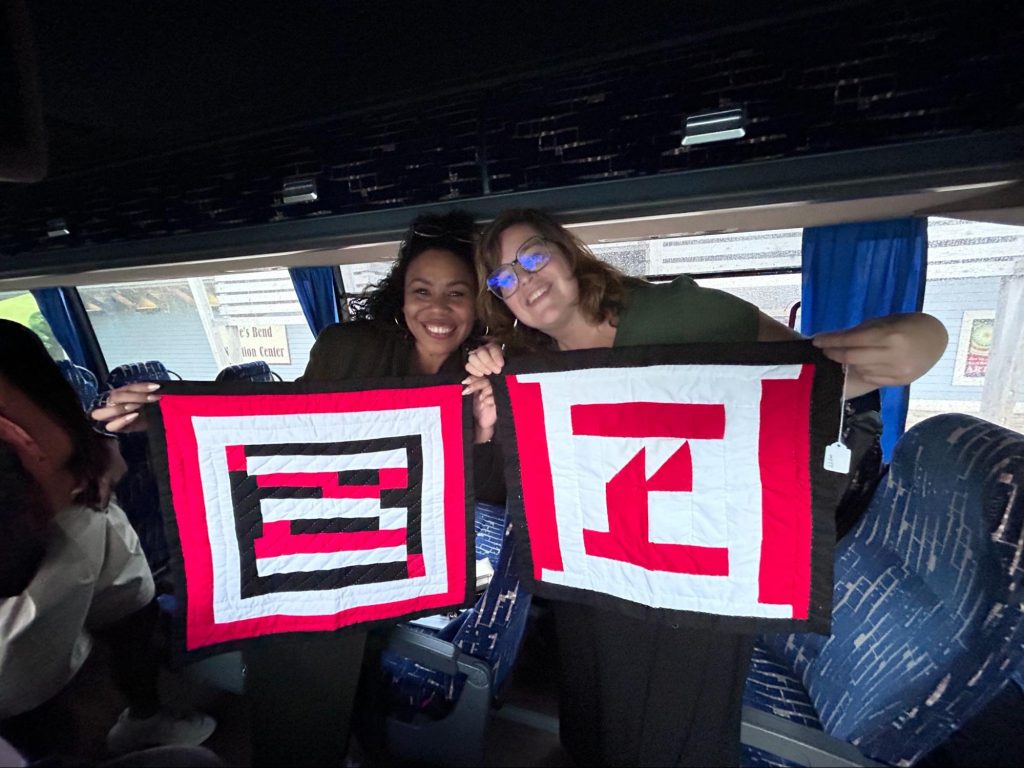
Next we traveled to Gee’s Bend. My mom was obsessed with these gorgeous quilts when I was growing up, so the art was familiar to me. There’s been so much work done to lift up these artists and their art, and interrupt legacies of Black artists’ work being stolen, and some quilters have built some wealth. But it’s wild to see how this success has not translated into community wealth or infrastructure–there’s no sanitation system, no gas station, no grocery store, no cell service, no internet, no place to stay, in Boykin, Alabama. There’s a ferry across the river, or a 45 minute drive to the nearest town. They are building a beautiful visitor center, hosting an annual “Airing of the Quilts” festival and reviving the Freedom Quilting Bee, a Black women’s cooperative founded in 1966. But there’s still so much need for investment.

Kate with Dr. Janelle Williams of the Atlanta Wealth Building Initiative

Our journey had so many special moments including a mardi gras band and farm-to-table dinner at the historic Black-owned Jenkins Farm, and a visit to Michelle Browder’s visionary project Mothers of Gynecology. And we ended in Montgomery, Alabama, where we heard from Black artists and creatives at a hip Black-owned gallery and event space. Throughout the trip, the RUNWAY team centered Black artists and Black art. During a panel Nina moderated with Black artists in Pritchard, she proclaimed: “Art and creativity is what makes life worth living.” Even in our side conversations, we found ourselves talking about the art we make, the art we dream of making, and how much creativity is required to be in this work of reimagining the economy. How finance itself is an art, and not a science. In Montgomery, I remember Jessica saying “What does it mean to be a creative entrepreneur? All Black Entrepreneurs have to be creative to survive and thrive.” 

Kate with Nwamaka Agbo, Jessica Norwood and Nina Robinson

And on our last day we visited Erica Washington at Clarke Street Fund. She sat us all down under a huge tree, and as I was enjoying the shade and wondering if it was a walnut, she shared that we were on the land of her Great-Grandfather and gathered under a more than 100 year old pecan tree, that still offered a bumper crop every other year. We were able to help weed some garden beds, and get our hands in the soil, and they offered us gorgeous refreshing watermelon juice. Across the street is an empty lot that used to house a grocery store run by her family. Now Erica and her sister are continuing that legacy and working to feed the community. 

On our first night in Mobile, Nwamaka Agbo shared: “We have to be clear that we too are trying to be transformed in doing this work.” It was not that we were trying to bring our ideas or strategies and impose them on these communities, where there is such a history of trust being broken and outsiders coming in to try to “fix” and ultimately abandon them. The trip was intended to change us, to reshape how we as investors were imagining returning resources to the South. I’m excited to return to Alabama as RUNWAY builds out more infrastructure to support Black creatives and entrepreneurs in the South, and I hope members of the Chordata community will come with me!

Returning to the South

June 10, 2019

by Tiffany Brown

Kate and I are clear that our core focus for Chordata Capital is to address the racial wealth divide. How could we not?! Kate and I first crossed paths at Resource Generation, when I was the Retreat Director. Nearly every Resource Generation conference begins with some form of a timeline activity of the racist history of wealth accumulation in this country, where people walk the room locating points of where their family accumulated wealth adjacent to a counterpoint of a racist law (like the Homestead Act). It’s only natural that we would build an investment advisory practice that is rooted in a commitment to racial and economic justice. Our work with our clients seeks to repair the damage done (actively or passively) by the accumulation of wealth, through divestment from the extractive economy and then reinvestment into more restorative options. We are shifting the orientation of investment from transactional to relational. I know using words like “relational” or “restorative” can be performative tools to exhibit woke-ness, but I want to peel back the veneer, and tell you about how we roll out investment as relationship: We took a trip to the deep South, and did it in community.

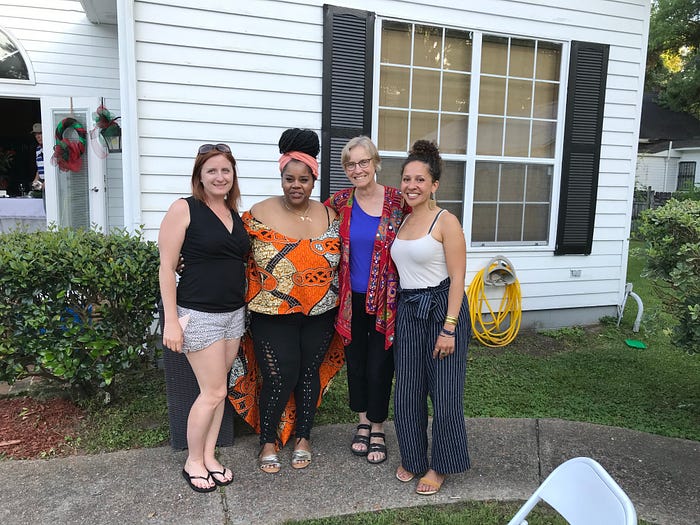
Lynne Hoey, Jessica Norwood, Natalie Shiras and Tiffany

I flew down to Mobile, AL in late April to do a tour of the South with my dear friends, Jessica Norwood (Runway Project) & Lynne Hoey (Candide Group). I’ve known Jessica for over a decade, and the three of us were RSF Integrated Capital Fellows 2017/2018. Each of us address the racial wealth divide through finance. One of our primary goals was to strengthen our relationship with Hope Federal Credit Union, which services the unbanked and underbanked in the Mississippi Delta.

Our plan was to start in Africatown, a neighborhood near Jessica’s hometown of Mobile, and then continue on to Jackson, MS. We’d end with a tour of the Mississippi Delta led by our colleagues at Hope Credit Union. Through one lens, we were 3 women in finance (Black, mixed-race, and white), doing due diligence on a financial institution, Hope Credit Union. The spirit of our trip was more about 3 women in finance working collaboratively to further our longer term vision, which is to partner with institutions that are working for racial and economic justice to address the U.S.’s racial wealth divide. To work towards repair. This doesn’t happen every day in finance.

AFRICATOWN

The first stop was Africatown, a community of descendants of current day Benin, who were brought over on the slave ship Clotilda in 1860, 52 years after the slave trade was outlawed. The illegal operation was financed by Timothy Meaher, a wealthy Mobile landowner, whose family still owns land and businesses in the Mobile region under various names. The people of Africatown are so close to their diasporic roots. The church has a marker outside that notes the founders’ English names, followed by their tribal names, and which tribe they came from. The Africatown cemetery is scattered with offerings from their practice of Vodou, another line of connection to a Mother Land. The descendants of Africatown remember the home they were stolen from.

Jessica and her father organized a ritual for us along the riverbank, which is now dominated by timber and paper mill buildings, whose smoke stacks have poisoned the Africatown community for decades. On a little section of land, we stood together and sent out prayers for the souls of Africatown to find their way back home to Benin. Jessica shared with us that the people of Africatown, once emancipated, fought for repatriation to Benin but were foiled in their attempts, namely by Meaher withholding earnings.

The experience I had in my body was that I was walking through the timeline activity, in real time, on the soil where the violence took place. I was witnessing the consequences of institutionalized exploitation, but also the resistance, and all under the guidance of our ancestors.

We drove past a smaller part of Africatown, called Lewis Quarters. It felt like a last stronghold of community amidst the timber and paper mills. We saw the school Africatown established, called the “Mobile County Training School.” They weren’t allowed to simply call it a school, it had to be qualified with “training” because that would legitimize that they were receiving the same caliber of education as white students. What I was synthesizing was that people were illegally stolen from their home with no consequence. Then they were legally enslaved in the U.S. for 3 years, and unofficially for longer. They worked on plantations for meager wages, that could never amass to the amount of wealth needed to get back home. To add insult to injury, their new home became a dumping ground for toxins from the paper industry, so they were (and currently are) poisoned by the primary industry that could offer jobs. And then their children attend a “training school,” to cement that they could only go so far in a country that stole them, wouldn’t let them go home, and definitely wouldn’t let them succeed here. In fact, the white powers that be would still like to figure out how to steal their labor and life as the nation amasses wealth at their expense.

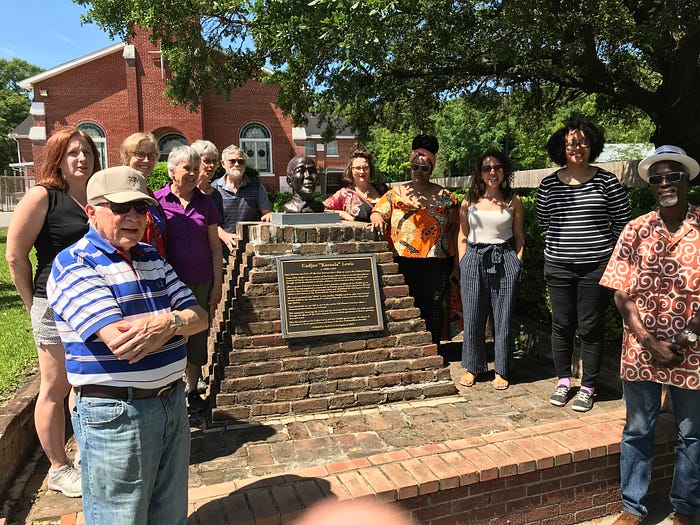
A monument to in Africatown to Cudjoe “Kazoola” Lewis, the last known Survivor of the last known slave ship to enter the United States

MONTGOMERY

The next day we went to the Legacy Museum in Montgomery, which told the same story, but covering a greater period of time and geographic area. It was the story of stolen people, enslavement for free labor, the premature withdrawal of federal troops after emancipation and lack of enforcement of the Civil Rights Act of 1866. Then it was Black Codes that could arrest and punish Blacks who didn’t have proof of employment, which led to convict leasing. In 1898, 73% of Alabama state revenue came from convict leasing to the lumber mills and for road maintenance. Even after 35 years of a supposed emancipation, Blacks were still forced into free labor, especially in the South.

The museum illustrated the reign of informal and institutional terror after Emancipation to keep Black people in their place: There were 4,000 documented lynchings between 1880 and 1940. The Equal Justice Initiative (EJI) has an exhibit of gallon size glass jars filled with soil, varying in shades from a light cocoa to a clay red, collected from the grounds of each lynching site. There is also a deeply moving lynching memorial down the street that EJI spearheaded, where coffin-sized rectangular iron blocks hang from the ceiling. Both the museum and the memorial are truthful and tragic assertions of sanctioned violence, which is hardly nationally acknowledged and for which there has not been an apology.

In the museum, I learned of several laws that sought to block Blacks out of the economic and political systems, and this is on top of all of the ones we already know of like segregation of schools (which didn’t end until1954), or preventing Blacks from voting until 1965. There was Shelley v. Kraemer (1948) that barred state enforcement of the 14th Amendment, legalizing discriminatory practices and preventing African American homeownership. Banks and racist deed covenants also worked against Blacks to prevent Black homeownership (this practice of redlining still happens). There was the attempt in 1939 with Lane v. Wilson to allow a 12 day one-time voter registration window for black citizens, and if you didn’t register in that window you’d be permanently barred, and then Gomillion v. Lightfoot (1963) attempted to deprive Blacks of political power by shady boundary creation for electoral districts.

The museum ended with a video installation where you could pick up a phone and see the video of a Black prisoner sharing their story with you about why they were incarcerated. The development of the prison industrial complex helped the nation move from convict leasing under the guise of a “war on drugs” or being “tough on crime,” and still profits from free Black labor. The start of the story was stolen people, and the end was their incarceration, all under the Constitution and a promise of equality and freedom.

In finance, particularly in working with people with inherited wealth, you see the product of compounding returns. This is how the wealth was amassed, and white people had a serious head start: A white ancestor invested in a company or multiple companies and those increased in value over time, and the gains from sales were used to buy more companies and assets, and the market has gone up and up and up.

But this trip had me thinking about compounding negative returns, and the toll this takes on individuals, on community, on spirit.

What happens when you can’t buy into an economic system that governs your existence, and you are foiled at every attempt to participate, through laws or theft or terror (like the Burning of Black Wall Street)?

JACKSON AND THE DELTA

In Jackson we experienced these compounding negative returns, physically and anecdotally. The predominantly Black parts of town, like West Jackson, have such disinvestment that you can’t drive in a straight line on roads covered in threatening potholes. The schools are F-rated, and the community conversation is about the elimination of blighted homes. As an outsider, these all felt like signs of deeper issues that bred this level of systemic disrepair.

We headed into the Mississippi Delta and saw this lack of investment in ghost towns, that clearly still have inhabitants, but no longer have a “main street.” We saw the shells of old business districts. These are towns that have unemployment rates in the teens, as compared to a national average which is now about 3.6%. We heard stories of slum lords renting houses with such unsafe electrical wiring that a woman’s house burned to the ground on 3 occasions. Each time the slum lord would just move her to another negligently-wired home. And there was no recourse. I felt like I was seeing the blowback from a white South not getting its way. First it was Emancipation and then integration and then the Voting Rights Act. The white South is engaged in an energetic game of chicken with the Black population, but waiting for us to swerve into extinction.

Enjoying a BBQ in Mobile, Alabama

RESISTANCE

The South really drives the point home that we have a past that we need to face. I appreciate that they don’t sugar coat it like they do in the North. But what I appreciate even more is the multi-prong resistance I was able to see in the South through the work of the Cooperative Community of New West Jackson (CO-OP NWJ), Cooperation Jackson, Hope Credit Union, Higher Purpose, Co and the Hawkin’s Project in Shaw, MS.

CO-OP NWJ

We stayed in West Jackson and learned about CO-OP NWJ through two hours of sharing stories with its co-founder Nia Umoja. Their work started in Jackson 5 years ago, and they have dozens of houses on 8 contiguous blocks. Nia and her community entered into Jackson at a politically ripe moment, and used grassroots organizing to build relationship and trust, in order to start to develop a Black sovereign community that could resource itself. The community identified 3 priority needs 1) to make money 2) to clean up (people couldn’t even get property insurance due to overgrowth of trees and lots were literal dumping grounds because of lack of services to their community) 3) to have something for the youth to do. Now they have a few thriving Air bnb rentals, which resource the community and the cooperative. They also have a garden, a CSA, and a fiber arts studio. A bookstore filled with DIY books, a grocery for staples, and a cafe run by the neighborhood youth are all in the works. CO-OP NWJ came out of the Malcolm X Grassroots Movement’s Jackson-Kush Plan, a strategic coordinated push to build Black political power in Jackson. While we didn’t have the opportunity to spend time with them, Kali Akuno, who authored the Jackson-Kush plan, leads Cooperation Jackson, another organization building the Solidarity Economy in Jackson.

HOPE FEDERAL CREDIT UNION

We were able to meet many of the staff at Hope Credit Union, including their founding CEO, Bill Bynum. Hope opens branches in otherwise neglected towns in the Delta so that people can deposit their paychecks and avoid the services of predatory check cashing businesses. They invest in thoughtful development projects to get communities into safe and affordable housing, help members achieve homeownership through mortgage lending, address food insecurity, and are even helping Hope members in Shaw, MS with their strategic plan for economic development. Hope has also partnered with a local high school to open a branch on campus and offer an academy style training program, where youth get financial literacy and mentorship. Hope coordinated our tour of the Delta from Jackson, to Itta Bena through Indianola and up to Shaw. They are doing the typical work of a CDFI using new market tax credits and private public partnerships, but they are doing it in an a-typical way. We got to see the strength of relationships that Hope has in the community, and the depth of their commitment to meet the needs of their constituency.

HIGHER PURPOSE, CO.

Higher Purpose, Co gave us a mini tour of their work in Clarksdale, MS. You could tell there were more resources in the town as compared to some of the other Delta towns we saw, namely Clarksdale’s downtown. There were brightly colored flags with the faces of famous bluesmen attached to light posts. An international obsession with the Blues, and blues fanatic’s fantasies of finding their inner bluesmen in the Delta led to a strange influx of foreign investment. Cultural appropriation brought money into Clarksdale. Now, how can the community build and control their own wealth? Higher Purpose, Co. addresses the racial wealth gap and the need for building community wealth through supporting entrepreneurship, affordable housing/real estate acquisition and buying land. Right now over 80% of the entrepreneurs they fund through small business loans are Black women.

HAWKINS PROJECT

It was so powerful to spend time with the numerous people who generously shared their time and stories with us. I have a call this week with one of the women we met from Shaw, MS. I’m getting an update on how their project is going, and to check dates for Homecoming so I can hopefully return. They recently got their local highway named the “Hawkins Memorial Highway” to commemorate Andrew Hawkins. Hawkins was a Black man who illuminated the discriminatory practices in the allocation of resources, such as sewers, sidewalks, streetlights and paving in the town of Shaw. The white side of town was well-resourced while the Black side was not. Hawkins took the case all the way up to the Supreme Court. In the aftermath, 3 of his family members were killed, without any justice. Now the town wants to share this story of resistance, and is rolling out a series of panel discussions, a play, and a number of historical markers around the town. They want to have all the plans laid in time for Homecoming so that the community can celebrate the acknowledgement of Mr. Hawkins and this win. Spending time with the community of Shaw was the energetic bookend to our trip in the Delta. This Supreme Court case was less than 50 years ago — a past that’s still close.

REPAIR, REPARATIONS

I’ve had this feeling that when we talk about reparations, it’s like making the case that someone should address this, and I think the fingers are pointed at our government. But let’s get real, we’ve never seen anything lasting to support healing or any kind of retribution from this fresh racist history, and we’ve been told this history forever! In fact, it seems like we learn new horrible details and systemic racist adaptations all the time. The more we talk about reparations, the more we seem to distance ourselves from our individual agency. The language used to talk about reparations can feel so performative these days, and while I’m glad these conversations are happening, I find myself impatient. Heady arguments about the “why” are important, but they seem to stay in the realm of the head and not manifest. We need to connect to the heart, and to engage with our outrage at what this country and economy has done and continues to do. We must find tangible steps to address repair. Black people and the South have been waiting way too long.

One of my mentors told me that “the universe responds to passionate intent and unconflicted behavior.” We operate at this crossroads, where we can be a bunch of do-gooders telling each other what we want to hear or take a leap for alignment to shift the universe. I’m lucky to know a number of incredible people who give a lot, and yet their investment portfolios continue to grow because of the traditional investment approach. What if the mass accumulation of wealth, quantified in the value of all those ticker symbols (of a bunch of corporations that don’t further the wellbeing of Black people), was actually channeled into direct placement investments to support the self determination of Black entrepreneurs who are rooted in community? I don’t believe that corporations are going to solve the racial wealth gap, or do much of anything except continue to try to make profits and grow. People who have more than “enough” are well-positioned to take the risk and press pause on wealth accumulation for the greater good. Let’s not wait for the government to roll out its take on reparations. I want to see accredited investors who believe in the concept of reparations express this desire through investing in Black and Native communities. It’s projected that the median net wealth of Blacks will hit zero by 2053. My fear is the risk of what will happen if we don’t start to address the racial wealth divide and the spiritual repair needed in this country. It is within our control to create a demand for repair through our actions.

*****************
To learn more about investing with a reparations lens, you can sign up for Chordata Capital’s Newsletter or attend our webinar on July 2nd.

Honoring Be Present: 35 years of Black Women’s Leadership

July 11, 2018

by Tiffany Brown

When I was in college at UC Santa Cruz, my area of focus was Community Studies with an emphasis on race and racism in the U.S. As a mixed race, working-middle class woman, who grew up in a predominantly white, wealthy neighborhood in Marin County, California, I was no stranger to either: race (and being different) or racism (as I was fine to keep as a friend, but my white friends had family mandates to not ever date a Black person…). I became a natural spokesperson for the racial moments of the 90s. There was the OJ Simpson trial, there was the Rodney King beating, and history class was always the kicker with the mandatory 25 pages on slavery in the US.

My life’s mission was to address racial challenges. The hard part was that every conversation about the issue led to a divide. I would speak up, and others would become defensive and shut down. The whole situation felt impossible. I was on a search to find a way to talk about race that created an opening instead of exacerbating a divide.

In 2002, after completing my 6-month internship with the Southeast Regional NAACP’s Prison Project in Atlanta, I flew back to Atlanta to participate in a conference organized by Be Present on Race, Gender, Power and Class. During my time with the NAACP, I met a participant in Be Present’s 18-month institute who encouraged me to attend their final conference that brought together a diverse community of women and girls to share the learnings of their cohort. I was hungry to learn about a model that would support me on my journey, and was absolutely nourished by the experience.

The format of that conference allowed for small groups to come up in front of the 100-person conference to introduce themselves. The model encourages sharing from the heart, and the heart is wild and free. One white, wealthy woman (seemed to go off script and) shared about an experience in her office, where she was a witness to racism against some Black women co-workers. She was feeling guilty about not having intervened. The founder, and lead facilitator, Lillie Allen, slowed down this moment and asked for a Black woman to volunteer to come up to the front of the room. Now this happened more than 16 years ago, but I still remember the conviction of my college-aged self. I raised my hand and went up to the front of the room. Lillie asked me to say how this all made me feel. I fancied myself a wizard with race theory, so I began to spout off all the key words and phrases. Lillie stopped me. She asked me to say what I was feeling. I was just 3–4 feet from this white woman, who had done nothing in the face of racism, and I looked at her, breathed, and shared from my heart. My heart was broken. I hated that I felt I had no choice as a Black woman in the U.S. as to whether or not I wanted to combat racism, and this white woman did. And as I looked at that white woman, I saw that her heart was broken too. I saw that racism is dehumanizing for all of us, and it always has been.

Tiffany (author) and Lille Allen of Be Present

I entered into a deep relationship with this work of Be Present and Lillie. It helped me to navigate my early 20s as an employee of an organization, YES!, which had adopted the Be Present Empowerment Model in its journey around race. The Co-Directors (a husband and wife team, and only other staff besides myself) were white, and one was the son of John Robbins of the Baskin Robbins ice cream family. Not only were we navigating race, but we were also unpacking the exceptional privilege of an inheritor, who’d founded a non-profit. So we were also talking about power.

The story of my time with YES! doesn’t exactly have a happy ending, but that’s not the point here… Over the course of my 20s, I learned about a model that centered the importance of weaving together our stories and how we impact one another. With the support of this model, I found my voice again, and rose to co-leadership of YES!. During this time at YES!, one of our major areas of programming was called Leveraging Privilege for Social Change, which brought together young people with “exceptional wealth or fame” for a week of skills sharing and movement building. It began as a collaboration with Resource Generation, Grassroots Leadership, and Changemakers. The constituency of YES! expanded to include powerful leaders of non-profit organizations. This was the beginning of a life-long journey to sit in circles with people with wealth and other movement leaders. The work was and continues to be about how we bridge the increasing divide, and unite under the power of a collective vision. The hard part is that we’ve all been so traumatized by this social and economic system with messages about what our (or others) race, power, class and gender mean, that it can be hard to come together to do what we say we are about! But Be Present opened my eyes to a path and tool box to help us to come together.

When I left YES!, I stayed connected to the work of Be Present, but drifted a bit. I did bring the tools, and an acknowledgement of the work with me everywhere I went. I brought it to my organizing with Resource Generation to strengthen our commitment and transparency about the power of cross-class, multi-racial leadership. I used it to hold space for young people with wealth to talk about their pain and their path. Be Present helped me to hold the clarity that our economic system isn’t working for anyone. If the American Dream is to accumulate wealth, but then even the wealthy aren’t happy, something is off! The work of Be Present helped me to stay true to myself, to see and to create space for the light in others, and to build effective relationships and alliances as I make my way through this world.

One of the first steps of the Be Present Empowerment Model is to “know yourself outside the distress of oppression.” This work started over 35 years ago as the Black Women’s Health Project. Lillie was involved in public health work in the south, and she saw that disease was plaguing Black women. We were internalizing racist messages, and suffering in silence, so Lillie developed a model that centered the individual to have a community of support to discharge and work on the messages and stories that weren’t serving us. The oppression was causing disease, and she was determined to support other Black women in stepping outside of this. The next step is to listen to others in a clear and present state, which is largely understanding the importance of the quality of attention we give one another. If we aren’t giving that, it tends to be due to a trigger that is getting in the way of us interrelating. This is where a lot of transformation in work across difference can happen. We’ve been so divided that it is essentially rewiring and humanizing one another so that we can BE together. And shorthand, being together and staying in relationship is the final step.

It’s important for me to lay out the history and the steps to presence the leadership and brilliance of Black women.

It seeps into so many other areas of work. I carry it with me now as I step into a cross-class, multi-racial leadership team with my business partner as we center love and humanity in finance. I draw upon the teachings and the diverse community of supporters as I find a new kind of voice as I speak the language of finance. There are not many Black women in this sector, and not many investments that look to lift up our people, yet here I am (and here we are), building this financial advisory firm rooted in racial and economic justice. We are turning our attention to this area of work, with all the tools we can muster in our toolbox, to bridge the racial and economic divide. For this, I call upon the great source of strength: Be Present.

People speak of political homes, and Be Present is one of mine. A couple weeks ago, I went to Be Present’s conference celebrating 35 years of Black Women’s Leadership in Building Inclusive Movements for Social Justice. There were over 115 participants. It was the most diverse conference I have ever experienced. Poor folks, middle-class, rich folks (as Be Present has done a lot of work with the Threshold community), Black folks, Native folks, white, Latinx, men, women, non-binary… And we all came together to honor Black women in this community of practice, which looks so much like the kind of world we want to be in. In Be Present, the people are the agenda, and the outcome of the conference felt like the brightest expression of our collective spirit and intention to work towards a world that suits all of us.

This work speaks to the depths of my spirit. And my soul’s prayer is that I may presence it always.

  • « Go to Previous Page
  • Page 1
  • Page 2
  • Page 3
  • Go to Next Page »

Footer

Receive updates, articles and comics from Chordata Capital.

* indicates required
I...
/* real people should not fill this in and expect good things - do not remove this or risk form bot signups */

Intuit Mailchimp

  • About Us
    • Backbone
    • Ecosystem
    • Our Team
  • Investment Advising
    • Our Approach to Investing
  • Impact
    • Our Investments
    • Chordata Cohort
  • Resources
    • Blog
    • Zine
    • Press
  • Contact Us

Tiffany Brown and Kate Poole are Investment Advisory Representatives of Natural Investments PBLLC. Natural Investments is an independent Registered Investment Advisor firm. Chordata Capital is not a registered entity and is not an affiliate or subsidiary of Natural Investments PBLLC . See our Disclosures and Disclaimers and read our Form CRS.

Copyright © 2026 Chordata Capital · Site Credits

Receive updates, articles and comics from Chordata Capital.

* indicates required
 
 
/* real people should not fill this in and expect good things – do not remove this or risk form bot
signups */